Navigasi Utama
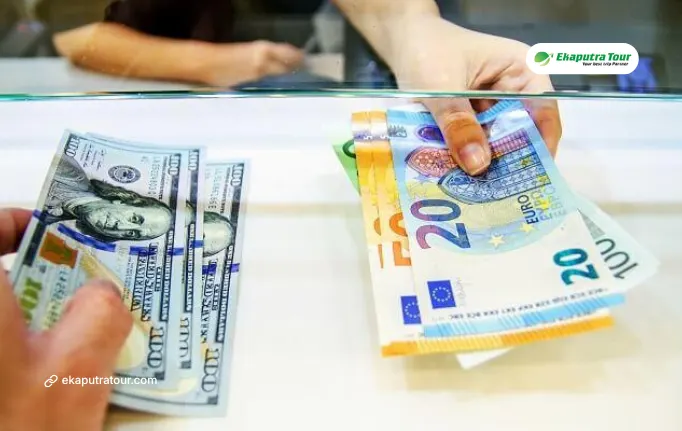
Knowing where to exchange money in Jakarta can save you significant amounts and prevent frustrating scams during your visit.
Indonesia operates on a cash-heavy economy, making currency exchange an essential part of your travel preparation.
While credit cards work in major establishments, you'll need Indonesian Rupiah for street food, local transportation, traditional markets, and many smaller businesses.
This 2025 guide helps you navigate Jakarta's currency exchange landscape, find the best rates, avoid common pitfalls, and ensure you have enough cash for your Indonesian adventure without losing money to poor exchange rates or fraudulent practices.
Before exchanging money, understand that Indonesian Rupiah (IDR) comes in large denominations. You'll commonly see 100,000, 50,000, 20,000, 10,000, 5,000, 2,000, and 1,000 Rupiah notes.
Don't be alarmed when small purchases cost hundreds of thousands of Rupiah. The currency's lower value relative to dollars, euros, or pounds means you'll handle larger numbers than you're accustomed to.
Exchange rates fluctuate daily based on global markets. As of 2025, rates have remained relatively stable, but always check current rates before exchanging to know if you're getting a fair deal.
Jakarta offers numerous currency exchange options, each with advantages and disadvantages. Knowing where to go ensures better rates and safer transactions.
Licensed money changers provide the best combination of competitive rates and security. These establishments display official licenses and operate transparently.
You'll find them throughout Jakarta, particularly in shopping malls, business districts, and tourist areas.
Shopping mall money changers are convenient and generally trustworthy. They offer decent rates, operate during mall hours, and provide receipts for every transaction.
The secure environment of malls adds an extra safety layer compared to street-level operations.
Business district money changers cater to professionals and typically offer competitive rates due to high transaction volumes.
Areas like Sudirman, Thamrin, and SCBD have multiple options within walking distance.
Indonesian banks exchange foreign currency, though rates are typically less favorable than licensed money changers.
Banks compensate for lower rates with maximum security and reliability. If you're exchanging large amounts or prefer institutional guarantees, banks are solid choices despite slightly lower returns.
Major international banks like Citibank, HSBC, and Standard Chartered, along with Indonesian banks like BCA, Mandiri, and BNI, all provide currency exchange services. Expect to show your passport for bank exchanges.
Soekarno-Hatta International Airport has numerous exchange counters in all terminals. While convenient for arriving passengers needing immediate cash, airport rates are consistently 3-5% worse than city money changers.
Exchange only what you need for immediate expenses like transportation to your hotel, then find better rates in the city.
Many travelers exchange $50-100 at the airport for initial needs, then visit mall money changers the next day for better rates on larger amounts.
Never exchange money with unauthorized street vendors or individuals approaching you with "special rates."
These scams range from counterfeit bills to short-changing through distraction techniques. Stick to licensed establishments with physical locations.
Beach areas, tourist traps, and unofficial booths often offer terrible rates that look attractive until you calculate the actual conversion. If a rate seems too good compared to market rates, it's probably a scam.
Smart strategies maximize how much Rupiah you receive for your foreign currency.
Don't exchange at the first place you see. Check rates at 2-3 different locations before committing. Exchange rates vary significantly between providers.
A quick comparison saves money, especially on larger exchanges.
Many money changers display current rates on digital boards outside their shops. Take a few minutes to walk around and compare.
Online currency converters give you baseline market rates to judge if physical locations offer fair deals.
Money changers often provide better rates for larger transactions. If you're staying in Jakarta for a week, exchanging $500 once gets better rates than five separate $100 exchanges.
However, balance this against carrying large cash amounts. Use hotel safes to store excess cash securely.
Currency exchangers prefer crisp, undamaged bills and often reject or offer lower rates for old, torn, or marked notes.
US dollars are most widely accepted, followed by Euros, British Pounds, Singapore Dollars, and Australian Dollars. Bring bills in good condition, preferably newer series.
$100 bills typically receive better rates than smaller denominations. If exchanging US dollars, $100 and $50 notes usually get premium rates compared to $20s or smaller bills.
Exchange rates fluctuate based on global currency markets. While you can't time the market perfectly, avoid exchanging during extreme volatility. Check news for major economic announcements that might affect exchange rates.
Weekday exchanges during business hours generally offer better rates than weekends or holidays when fewer money changers operate and competition decreases.
Protecting yourself from fraud ensures your money reaches your pocket intact.
Always count your money before leaving the exchange counter. Verify the amount matches what you should receive based on the agreed rate. Scammers count quickly, hoping you'll trust their count without verification.
If numbers don't match, immediately point out the discrepancy while still at the counter. Legitimate exchangers correct honest mistakes. Scammers often claim you miscounted and refuse to fix the problem once you've left.
Jakarta Safety Guide for First-Time Visitors supports smart travel planning. Safety awareness improves your overall experience.
While less common at licensed establishments, counterfeit Rupiah exists. Familiarize yourself with real Indonesian banknotes.
Look for watermarks, security threads, and color-shifting elements. Licensed money changers rarely pass counterfeits, but awareness protects you everywhere.
Legitimate money changers provide detailed receipts showing the exchange rate, amount given, amount received, and transaction time.
Keep these receipts until you've verified everything is correct and left the establishment. Receipts also help track your spending and serve as proof of transaction if problems arise.
Exchange money in established shopping malls, hotel lobbies, or business districts rather than isolated locations.
Busy, visible places with security cameras discourage scams. If something goes wrong, you have witnesses and can report to mall security or police.
Knowing where to exchange money in Jakarta empowers you to get the best value for your currency while avoiding scams and frustration.
Choose licensed money changers in shopping malls or business districts, compare rates before committing, bring clean bills in popular currencies, and always verify your money before leaving the counter.
Whether you exchange at authorized money changers for the best rates, use ATMs for convenience, or combine both methods, Jakarta offers plenty of safe options for accessing Indonesian Rupiah.
With these 2025 tips, you're prepared to handle currency exchange confidently and focus on enjoying everything Jakarta has to offer. Exchange smart, stay safe, and make the most of your Indonesian adventure!