Main Navigation
Jakarta's public transport network has grown up fast. What used to be a city defined by gridlock is now home to a genuinely useful trio of transit options: TransJakarta buses, the MRT, and the LRT. For visitors who want to explore the capital like a local, without relying entirely on taxis, this TransJakarta MRT LRT guide for tourists breaks down exactly how each system works, what it costs, and how to move between them smoothly.
Jakarta's transit map is built around three complementary layers. TransJakarta is the bus rapid transit system, with dedicated lanes crisscrossing nearly every district of the city. The MRT (Mass Rapid Transit) is a modern underground and elevated rail line running north to south through the city center. The LRT (Light Rail Transit) is a smaller elevated network connecting specific residential and business corridors. Together, they cover most of the areas travelers care about: Monas, Kota Tua, Senayan, and the main business districts. If you'd like a broader overview of getting around the city, including taxis and ride-hailing apps, our transportation guide in Jakarta for tourists is a helpful companion to this article.
The easiest way to use all three systems is the JakLingko card, a multi-trip electronic card accepted on TransJakarta, MRT, and LRT alike. You can buy one at MRT and LRT station counters or convenience stores near major TransJakarta shelters for a small initial fee, then top it up with cash at station kiosks or via mobile banking apps. If you already carry an Indonesian bank e-money card (like those from major national banks), that works too, so there's genuinely no need to juggle separate tickets for each mode of transport. This is one of the simplest wins for tourists navigating Jakarta public transport for the first time.
TransJakarta is Jakarta's backbone, with dozens of corridors covering the entire metro area. Buses run in dedicated lanes, which means they skip much of the notorious traffic congestion. Learning how to use TransJakarta starts with identifying your nearest shelter (the enclosed boarding platforms along main roads) and checking the corridor number that matches your destination.
TransJakarta is also the most budget-friendly option, with a flat fare regardless of distance, making it ideal for longer cross-city trips.
The MRT is Jakarta's newest and most comfortable rail option, running from Lebak Bulus in the south to Bundaran HI in the city center, with an extension northward underway. For visitors, the Jakarta MRT ticket price is genuinely appealing: fares are distance-based and generally range from about Rp 3,000 to Rp 14,000 per trip, making it one of the cheapest ways to cross town quickly and in air-conditioned comfort.
Stations like Bundaran HI, Dukuh Atas, and Blok M are particularly useful for tourists, sitting close to shopping districts, business hubs, and connecting points to other transit lines. The MRT is also notably punctual, which makes it a reliable choice when you have a fixed schedule, such as catching a flight home or making it to a dinner reservation on time.
The Jakarta LRT route map covers a narrower but still valuable stretch of the city, mainly serving eastern Jakarta corridors and newer residential-business zones. It's less essential for typical sightseeing itineraries, but if your hotel or a specific attraction happens to sit along an LRT line, it's a fast and comfortable way to skip surface traffic entirely. Many travelers use LRT in combination with TransJakarta or a short taxi ride to bridge the final stretch to their destination.
The real strength of Jakarta's public transport system is how well the three modes now connect. Integrated stations, particularly around Dukuh Atas and Blok M, let you transfer between TransJakarta, MRT, and sometimes commuter rail with minimal walking. Because your JakLingko card works across all three, you don't need to buy a new ticket at each transfer, which keeps journeys simple even if you're new to the city.
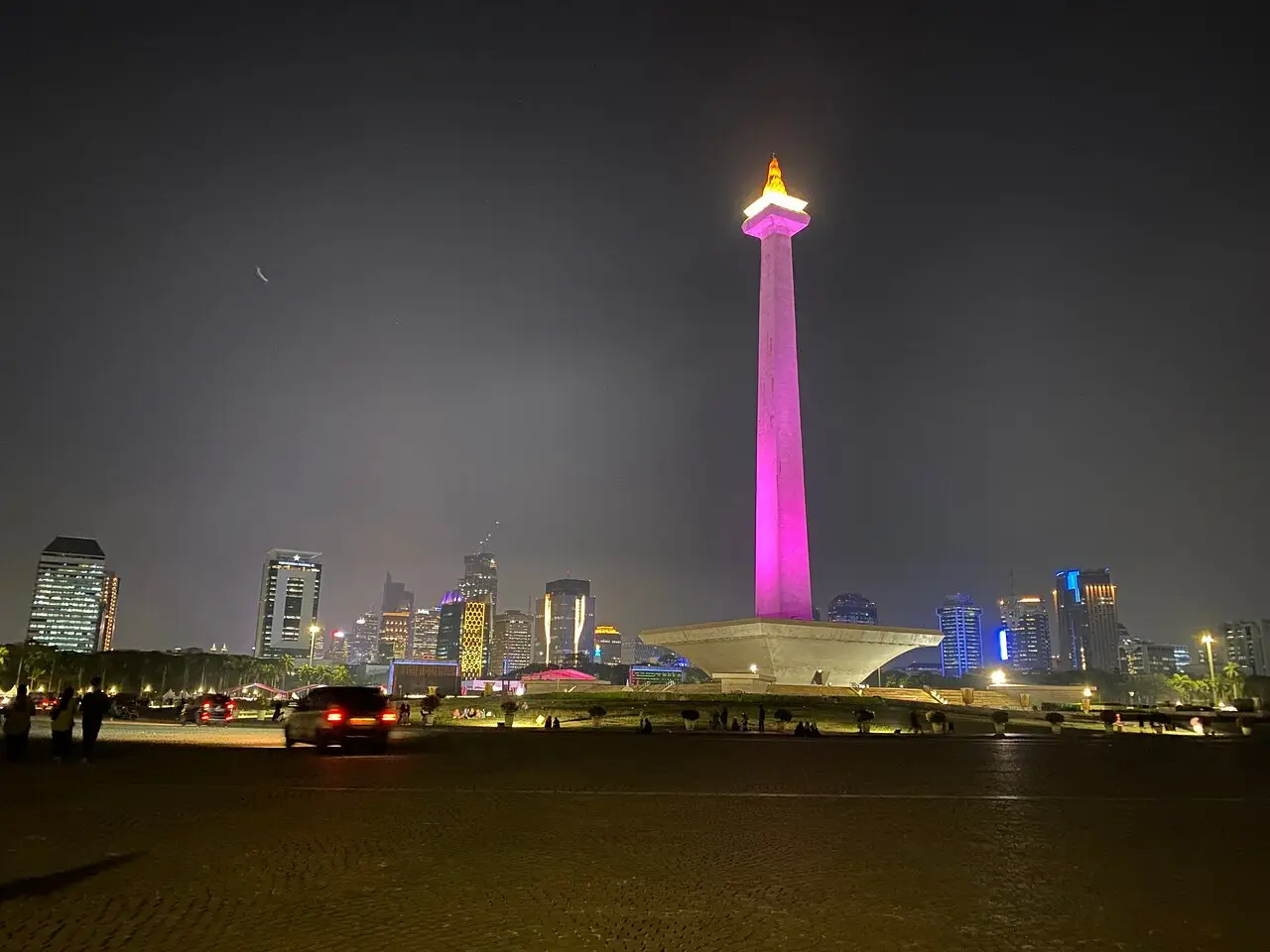
That said, public transport has its limits for evening plans. If you're heading out for something like a guided Jakarta night tour, a private vehicle is often more practical once bus frequency drops after dark. Similarly, for full-day itineraries that hop between distant districts, such as a full-day culture and landmark tour, having a driver handle the logistics leaves more time for actually enjoying the sights.
A few habits will make your rides smoother and safer. Avoid peak hours if you can, since both TransJakarta corridors and MRT platforms get tightly packed between 7-9 AM and 4-7 PM. Keep bags zipped and in front of you during crowded rides, a good general precaution covered in more detail in our guide to avoiding scams targeting tourists in Jakarta. Queue in orderly lines at MRT platforms, offer priority seats to elderly or pregnant passengers, and keep voices low inside train carriages, as Jakartans tend to ride quietly.
For route planning, the JakLingko app and Google Maps are the two most reliable Jakarta public transport apps, both showing live schedules and helping you plan transfers between TransJakarta, MRT, and LRT in real time. If you're still deciding where to base yourself for easy access to these transit lines, our guide on where to stay in Jakarta for tourists highlights neighborhoods well-connected to MRT and TransJakarta corridors.
No. A single JakLingko multi-trip card, or any Indonesian bank e-money card, works on TransJakarta buses, the MRT, and the LRT, so you don't need to buy separate tickets for each system.
MRT fares are distance-based and typically range from about Rp 3,000 to Rp 14,000 per trip, making it one of the cheapest ways to cross the city quickly.
Yes, TransJakarta is generally safe, with dedicated bus lanes, ticket gates, and security staff at major shelters, though it's wise to watch belongings during crowded rush-hour rides.
Many downtown and historic areas are reachable by TransJakarta corridors, but for evening excursions like a guided night tour, a private car with a driver is often more convenient once buses run less frequently.
The JakLingko app and Google Maps both show live TransJakarta, MRT, and LRT schedules and help plan transfers between the three systems in real time.
Neither the MRT nor the LRT currently reaches Soekarno-Hatta Airport directly; travelers typically use the Airport Railink Train or a private car charter for that route instead.
Ready to see Jakarta after dark without worrying about bus schedules or transfers? Book the Jakarta Night Tour and let a local guide handle the route while you enjoy the city's glowing skyline.